
Dental crowns in Ireland
What a crown costs, which material suits which tooth, and what happens at each visit. Check yours in four taps. Then, if you want it, one Dental Council registered dentist who covers your county rings you with a price.
Free to send, no obligation. One registered dentist rings you, not five.
- €500–€1,500a crown on one tooth, in our price guide
- 20%back as tax relief on every crown
- 2 visitsabout two weeks apart, for most crowns
- 10 to 15 yearshow long a crown often lasts
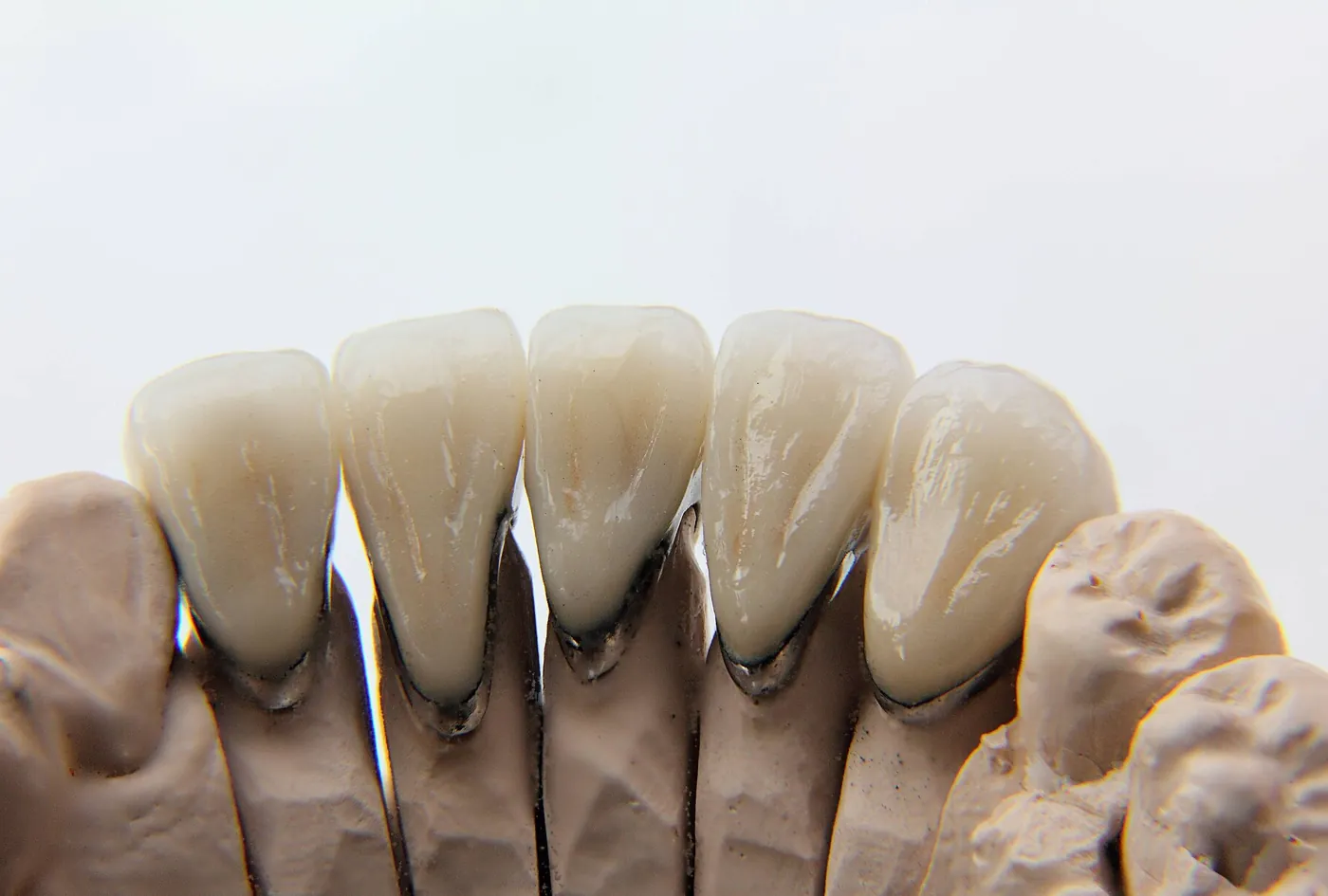
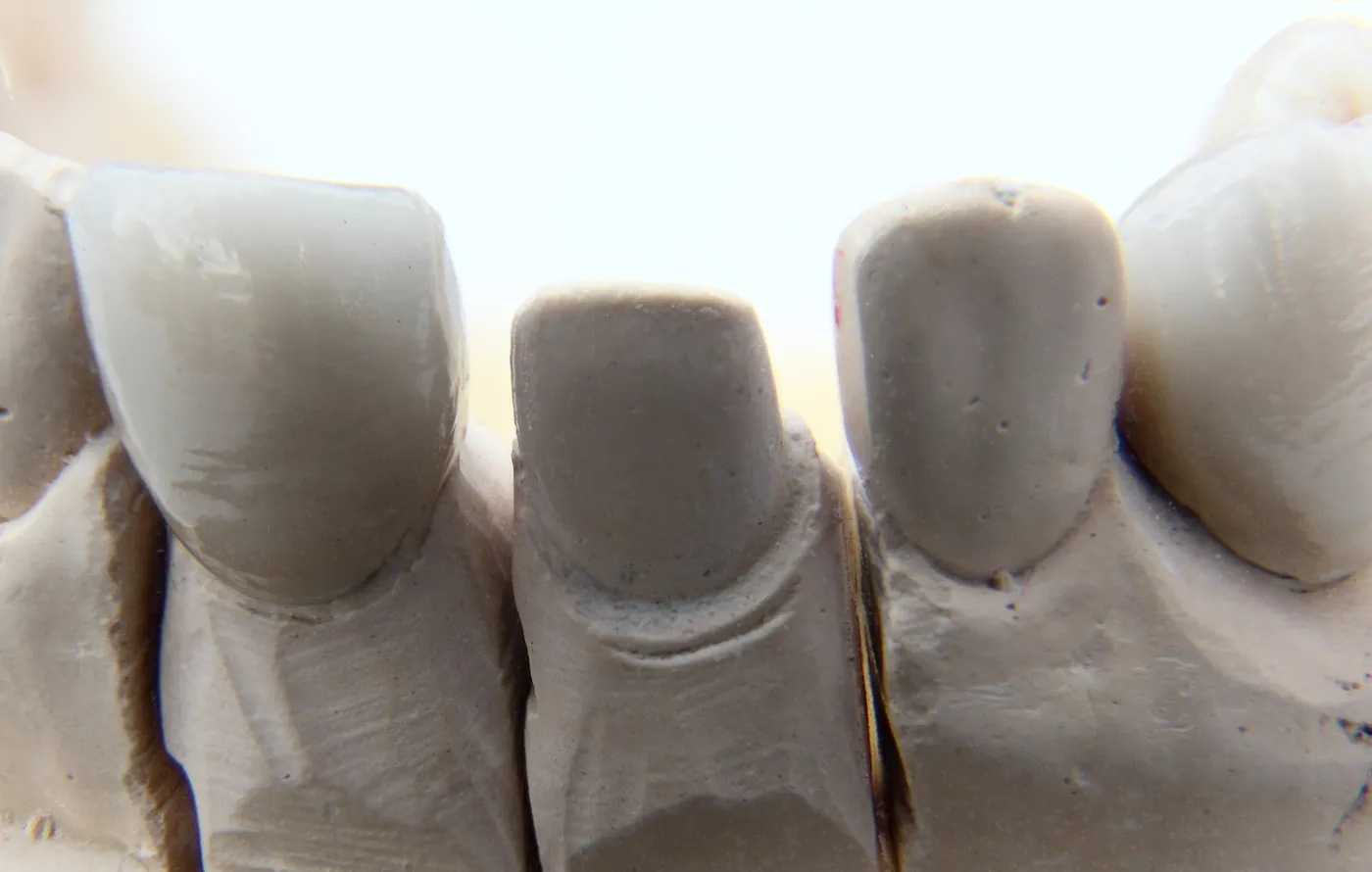
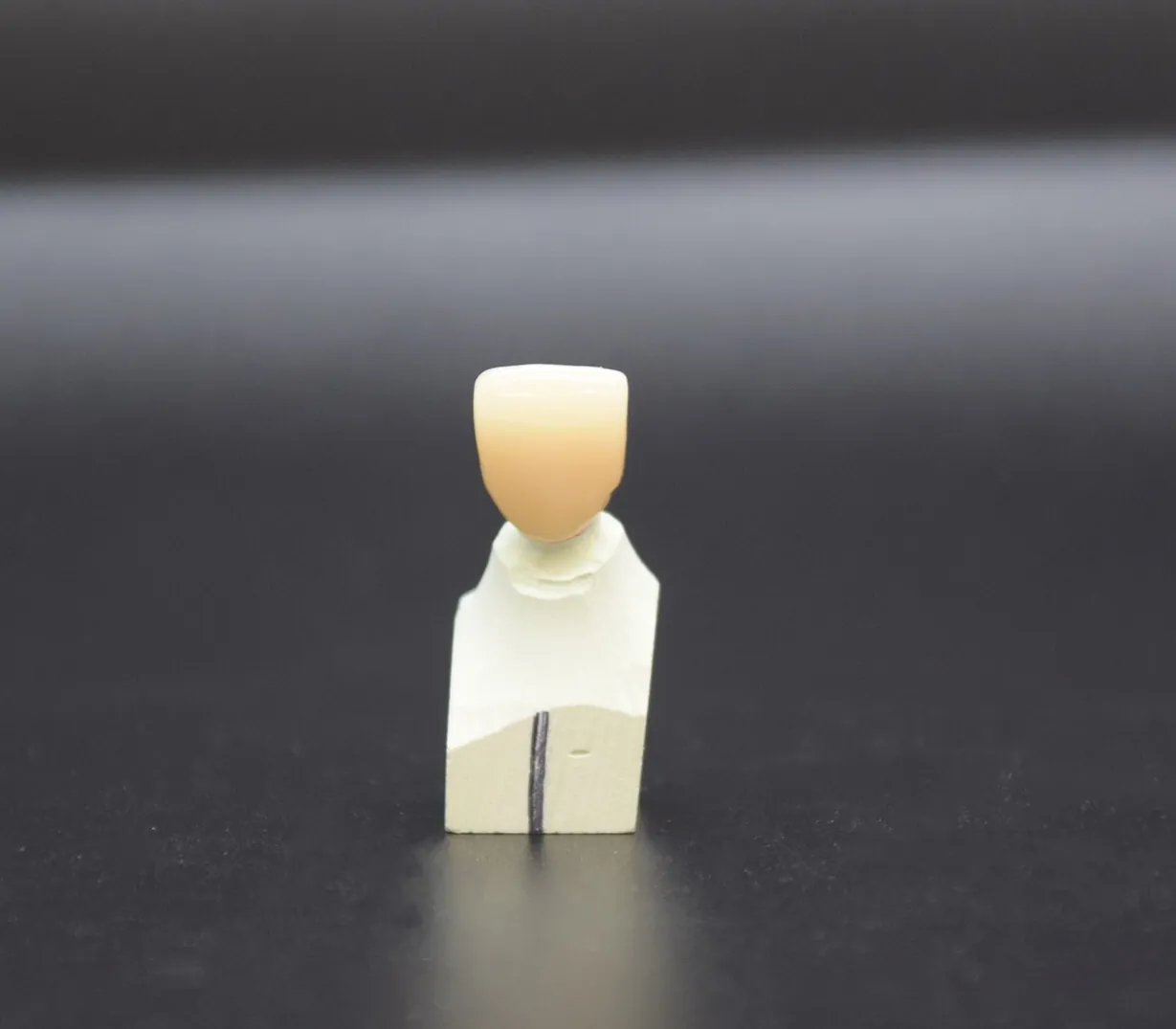
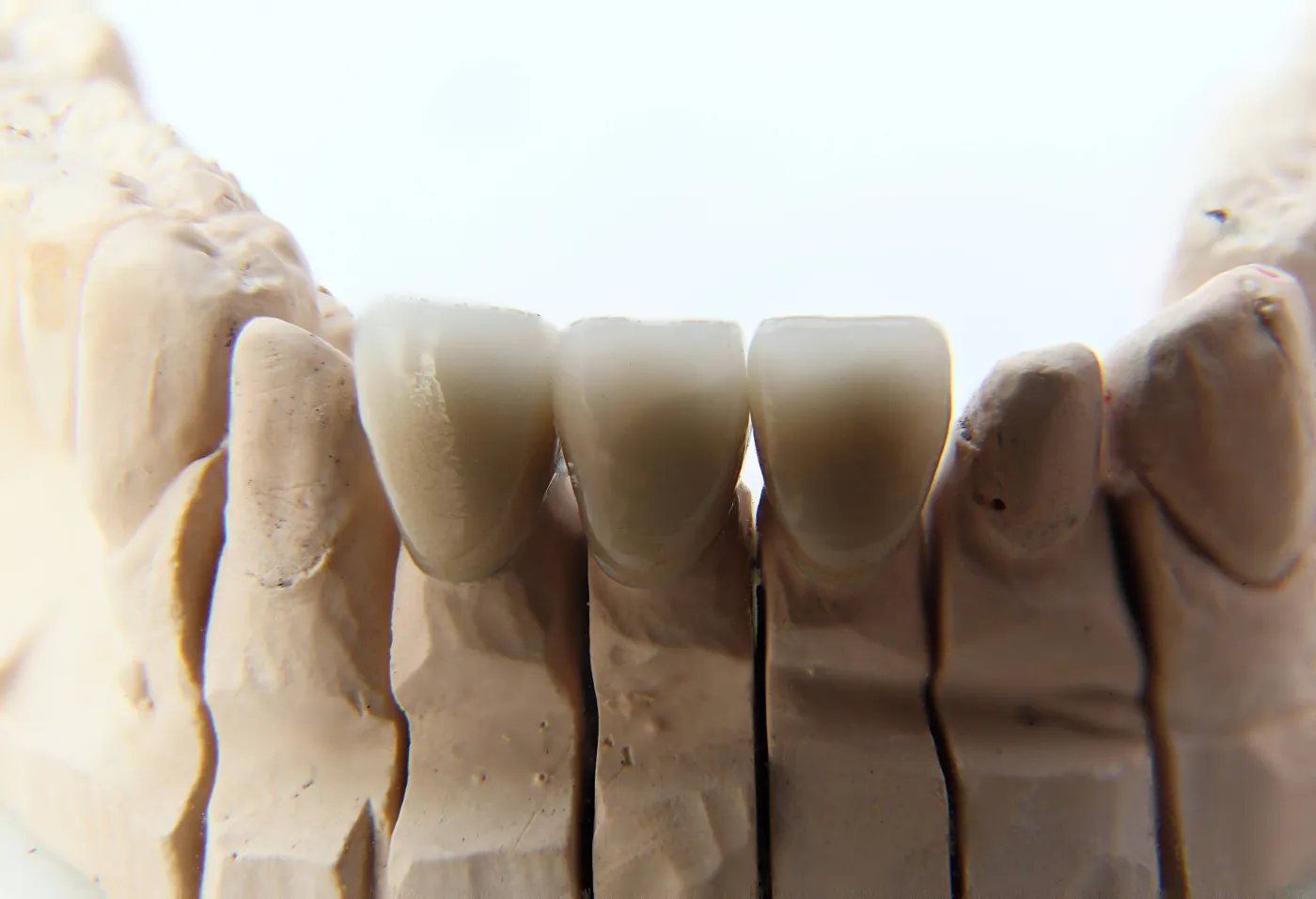
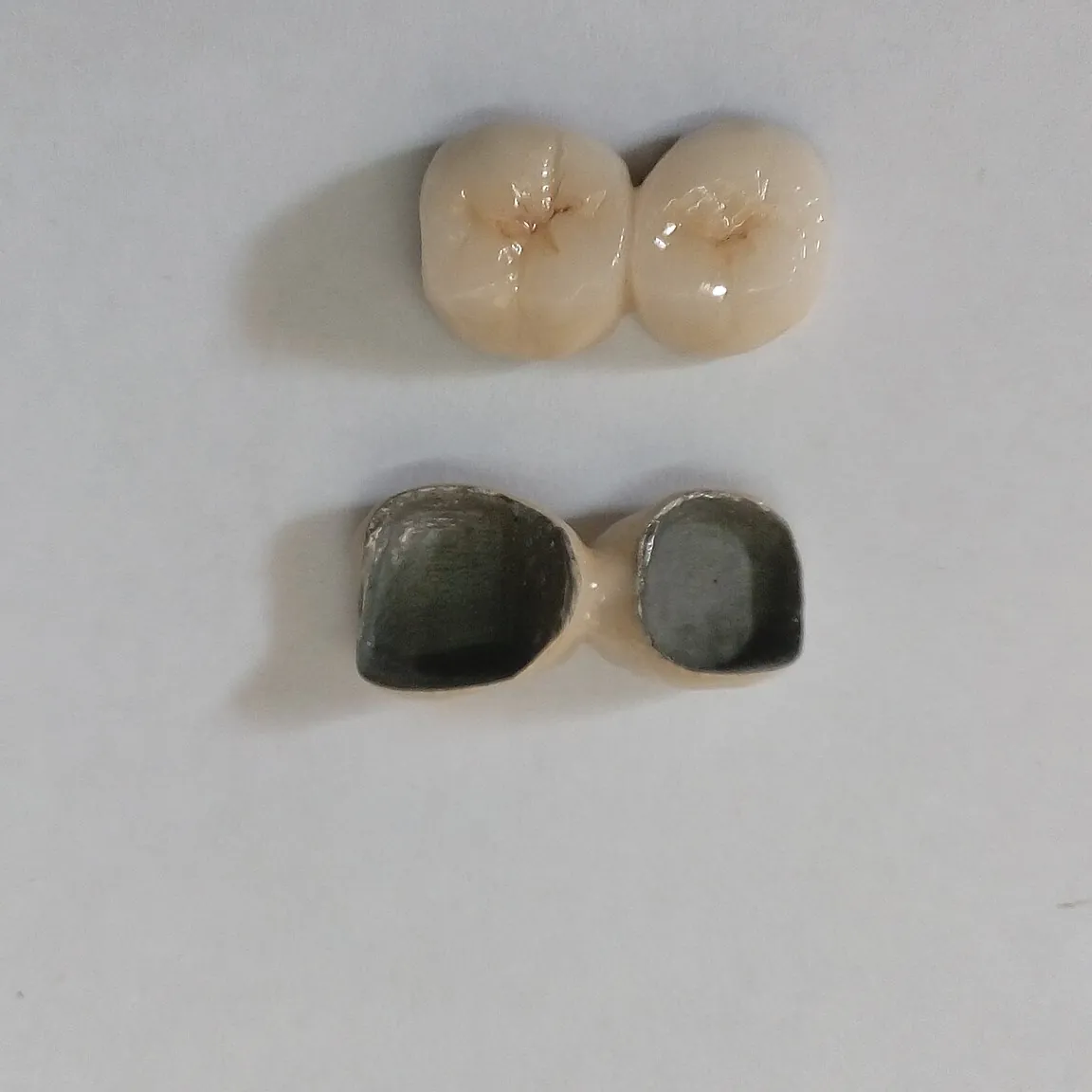
What a dental crown looks like
Real crowns on laboratory models. A crown is a hollow cap made to fit over one shaped tooth.
How it works
 1Check your crownFour taps: what's wrong, which tooth, how many, your county. You see the likely crown, the cost and the tax relief straight away.
 2One registered dentist rings youWith your consent your answers go to one Dental Council registered dentist who covers your county. One dentist, not a list.
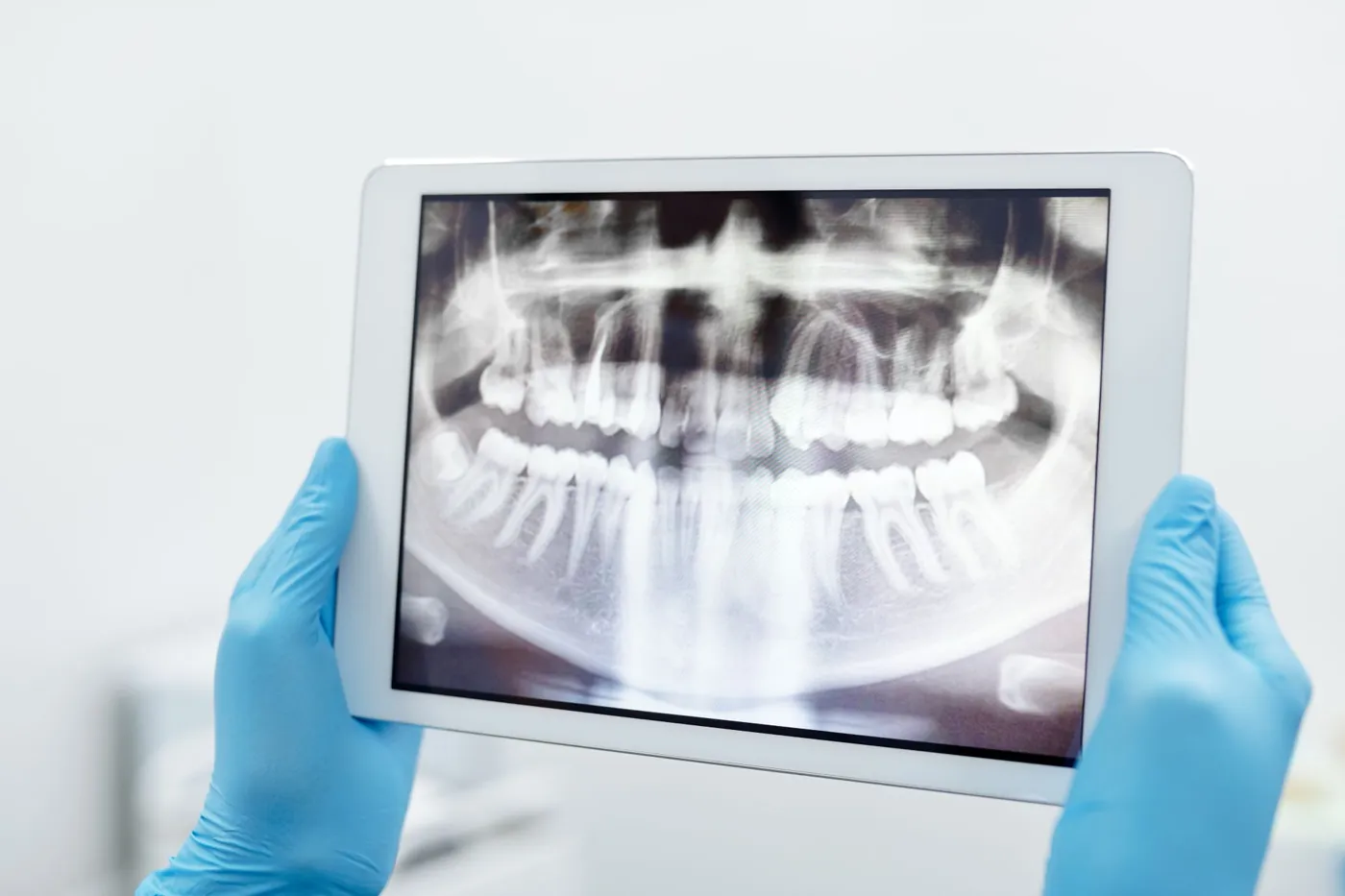 3An exam, an x-ray and a written priceThe dentist looks at the tooth, says whether a crown is the right repair, and gives you the price in writing before anything starts.
Our price guide for a dental crown
Per tooth, at private practices in Ireland. Your dentist gives you the exact price in writing after an examination.
| Job | Typical cost | What moves the price |
|---|---|---|
| Porcelain fused to metal crown | €450 to €900 | The metal under the porcelain: a precious alloy costs more |
| Zirconia crown | €570 to €1,250 | Milled in one piece, or layered with porcelain for a front tooth |
| E.max all-ceramic crown | €450 to €900 | The laboratory, and how much hand finishing the shade needs |
| Gold crown | €625 to €1,100 | The price of gold on the day it's made |
| Crown on an implant | €950 to €1,235 | The crown only. The implant is priced separately |
| Onlay or inlay | €230 to €850 | Composite, porcelain or gold, and how much of the tooth it covers |
| Post and core, before the crown | €120 to €400 | A fibre post or a cast metal one |
| Re-cementing a crown that came off | €55 to €80 | Only if the crown and the tooth are both sound |
| Exam, and a small x-ray | €40 to €66, €20 to €26 | A full panoramic x-ray is €50 to €81 |
What's included
- The local anaesthetic, shaping the tooth, and the scan or mould.
- A temporary crown while yours is made (some practices list it separately).
- The laboratory's fee for making the crown.
- Fitting, checking the bite and cementing it.
- A Form Med 2 for your tax relief claim, when you ask for it.
What pushes it up or down
- The material. Porcelain fused to metal sits lowest, hand-finished ceramic for a front tooth highest.
- What the tooth needs first. A core build-up, a post and core or root canal treatment are priced on top.
- Who does it. A specialist in restoring teeth usually charges more than a general dentist.
- How many. The price is per tooth. Ask whether several at once changes it.
- Tax relief. Whatever the price, 20% comes back when you claim.
Types of crown
Where the tooth sits decides the material more than anything else.
Porcelain crownsTooth-coloured all the way through, or porcelain over metal. €450 to €1,250 depending on which.Zirconia crownsA very hard white ceramic, milled from one block. The usual pick for back teeth. €570 to €1,250.E.max crownsA glass ceramic that lets light through like enamel. The usual pick where the tooth shows. €450 to €900.Porcelain fused to metalPorcelain over a metal shell. Decades of use, and the lower end of the range. €450 to €900. Same-day crownsScanned, milled in the practice and fitted in one visit, with no temporary crown.
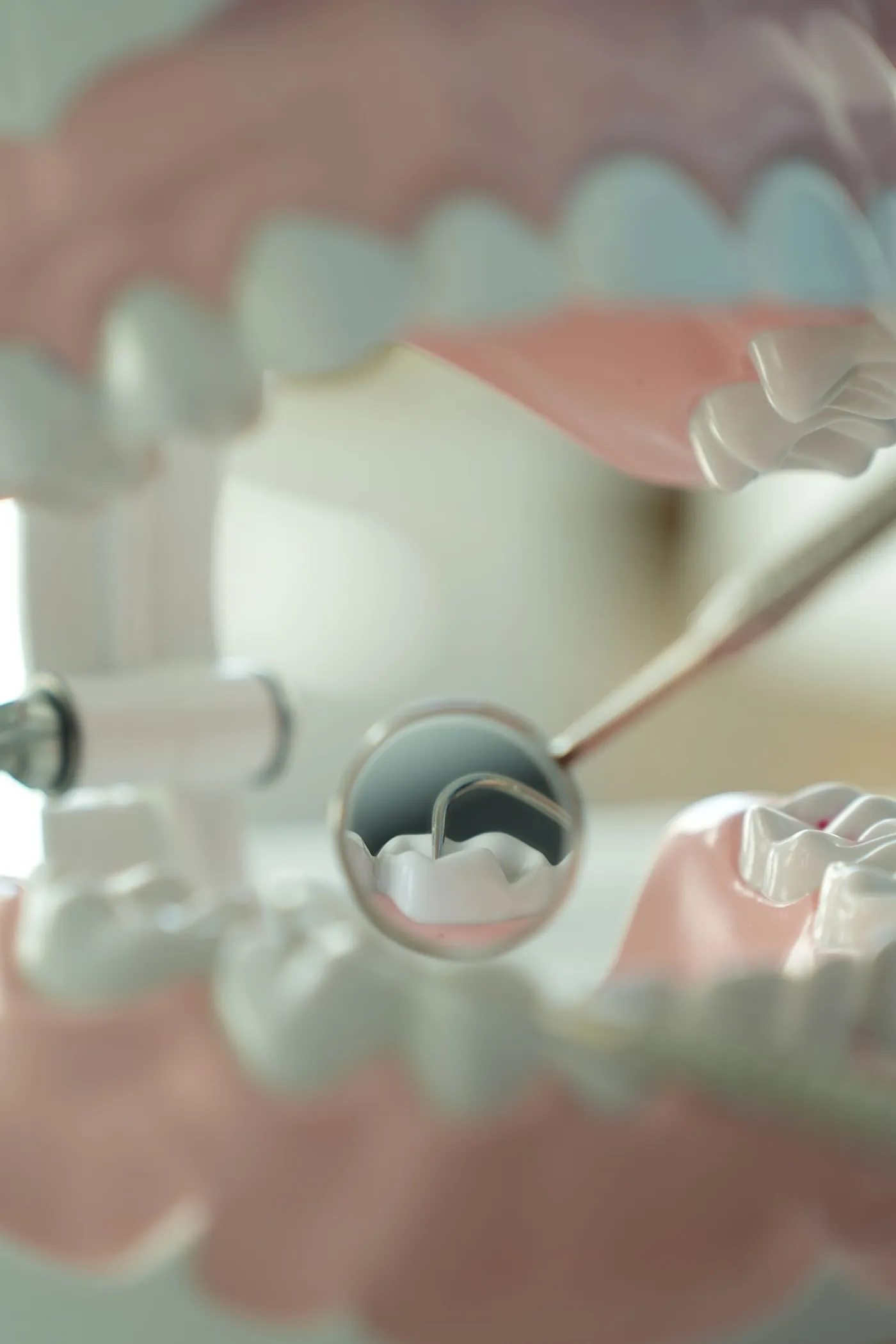 Crown on an implantMade to fit the implant, and screwed or cemented onto it. €950 to €1,235 for the crown.
Which crown for which tooth
| Tooth | What dentists most often use | Our price guide | After 20% tax relief |
|---|---|---|---|
| Front tooth | All-ceramic: E.max, or zirconia layered with porcelain | €450 to €1,250 | €360 to €1,000 |
| Side tooth (premolar) | All-ceramic, or zirconia if you grind | €450 to €1,250 | €360 to €1,000 |
| Back tooth (molar) | Zirconia. Gold or porcelain fused to metal are the older choices | €570 to €1,250 | €456 to €1,000 |
| Any tooth, price first | Porcelain fused to metal | €450 to €900 | €360 to €720 |
| On an implant | A crown made for the implant, usually zirconia | €950 to €1,235 | €760 to €988 |
More on the types of crown, what a crown costs and how to claim the tax relief.
Dental crowns by county
Each county page has its own dentist numbers, ages and towns.
- Carlow24 dentists, 1 per 2,582 people
- Cavan20 dentists, 1 per 4,085 people
- Clare42 dentists, 1 per 3,046 people
- Cork345 dentists, 1 per 1,693 people
- Donegal51 dentists, 1 per 3,276 people
- Dublin850 dentists, 1 per 1,715 people
- Galway121 dentists, 1 per 2,295 people
- Kerry77 dentists, 1 per 2,032 people
- Kildare86 dentists, 1 per 2,881 people
- Kilkenny51 dentists, 1 per 2,042 people
- Laois21 dentists, 1 per 4,375 people
- Leitrim11 dentists, 1 per 3,200 people
- Limerick98 dentists, 1 per 2,138 people
- Longford8 dentists, 1 per 5,844 people
- Louth37 dentists, 1 per 3,776 people
- Mayo48 dentists, 1 per 2,874 people
- Meath65 dentists, 1 per 3,397 people
- Monaghan8 dentists, 1 per 8,161 people
- Offaly26 dentists, 1 per 3,198 people
- Roscommon19 dentists, 1 per 3,698 people
- Sligo36 dentists, 1 per 1,950 people
- Tipperary58 dentists, 1 per 2,895 people
- Waterford71 dentists, 1 per 1,794 people
- Westmeath40 dentists, 1 per 2,406 people
- Wexford55 dentists, 1 per 2,980 people
- Wicklow62 dentists, 1 per 2,514 people
Check what your crown involves
Four quick taps. You see the kind of crown dentists most often use for that tooth, the likely cost and what's left after tax relief. Your number is only asked for at the end, if you want a price from a dentist.
Say a back tooth has cracked: that's usually a zirconia crown, €570 to €1,250 in our price guide, plus €60 to €92 for the exam and x-ray, with 20% of the crown back as tax relief.
How this is worked out
The kind of crown comes from where the tooth sits and what you tell us: all-ceramic where the tooth shows, zirconia where the chewing is heaviest or you grind, porcelain fused to metal where the price matters most, and a crown made for the implant where there is one. The prices are our price guide for Irish private practices, per tooth, plus an exam and a small x-ray. A tooth that has had root canal treatment often needs a post and core first, so that range is added to the top of the total. Tax relief is 20% of the crown and the post and core: crowns are on Revenue's list of non-routine dental treatment. It is a guide to plan with, never a diagnosis or a quote: the dentist decides after an examination and an x-ray.
Questions before you book
How much does a dental crown cost in Ireland?
A dental crown in Ireland costs €500 to €1,500 a tooth at private practices, and most are between €800 to €1,100. Porcelain fused to metal is €450 to €900, zirconia €570 to €1,250, E.max €450 to €900 and gold €625 to €1,100. Every crown gets 20% tax relief, so a €900 crown costs €720 once you claim.
Which type of crown should I get?
All-ceramic crowns such as E.max are the usual choice where the tooth shows. Zirconia is the usual choice for back teeth, where the chewing is heaviest. Porcelain fused to metal costs least. Gold is still used on back teeth for people who grind. Your dentist picks with you after an examination.
How many visits does a crown take?
Most crowns take two visits about two weeks apart. At the first, the tooth is numbed, shaped and scanned or moulded, and a temporary crown goes on. At the second, the finished crown is checked for fit, colour and bite, then cemented. A practice that mills crowns in-house can do it in one visit.
Does getting a crown hurt?
The tooth is numbed with a local anaesthetic before it's shaped, so the work itself shouldn't hurt. Tender gum and some sensitivity to hot and cold for a few days afterwards are common. Pain that builds, or a bite that feels high, is a reason to go back to the dentist.
How long does a crown last?
A crown often lasts 10 to 15 years, and many last longer. What ends a crown is usually decay at its edge, a crack in the porcelain or the cement letting go, so cleaning the gum line, and wearing a night guard if you grind, matter more than the material.
Can I claim tax back on a crown?
Every crown gets tax relief at 20%: crowns are first on Revenue's list of non-routine dental treatment. Your dentist fills in a Form Med 2, you keep it, and you claim under the Non-Routine heading of your health expenses. You have four years to claim.
Does the medical card cover a crown?
The medical card scheme covers an examination, two fillings, extractions and a scale and polish each year. Crowns are not part of it, so a crown is paid for privately, with 20% back as tax relief.
Does PRSI cover a crown?
PRSI Treatment Benefit pays for one oral examination a year and part of a scale and polish. It pays nothing towards a crown, but the free exam is a way to have the tooth looked at first.
Show all 12 questions
My crown fell out. What do I do?
Keep the crown, rinse it and bring it to a dentist within a few days. If the crown and the tooth are both sound it can usually be cemented back, €55 to €80. Don't use household glue. A pharmacy sells temporary crown cement to hold it in the meantime.
Do I need a crown, or would a filling do?
A filling repairs a hole. A crown covers the whole tooth, and is used when too little sound tooth is left to hold a filling, when a tooth has cracked, or after root canal treatment on a back tooth. In between there is the onlay, which covers only the weak part: €230 to €850. The dentist tells you which fits after an x-ray.
What happens after I send the Crown check?
One Dental Council registered dentist who covers your county gets your answers and rings you to arrange an examination. Nothing is agreed until you've seen them and have a price in writing.
How do I check a dentist is registered?
The Dental Council keeps the register of dentists in Ireland. Search the register on the Dental Council's site.
Every crown guide and county
Types of crown
Guides
Check what your crown involves
Four taps to the likely crown, the cost and the tax relief. Then, if you want it, one Dental Council registered dentist who covers your county rings you.