
Dental crown questions, answered
The cost, the materials, the visits, the problems and the tax relief.
Free to send, no obligation. One registered dentist rings you, not five.
- €800–€1,100most crowns, per tooth
- 20%back as tax relief
- 2 visitsabout two weeks apart
- 10 to 15 yearshow long one often lasts
Every guide on this site
Check what your crown involves
Four quick taps. You see the kind of crown dentists most often use for that tooth, the likely cost and what's left after tax relief. Your number is only asked for at the end, if you want a price from a dentist.
Say a back tooth has cracked: that's usually a zirconia crown, €570 to €1,250 in our price guide, plus €60 to €92 for the exam and x-ray, with 20% of the crown back as tax relief.
How this is worked out
The kind of crown comes from where the tooth sits and what you tell us: all-ceramic where the tooth shows, zirconia where the chewing is heaviest or you grind, porcelain fused to metal where the price matters most, and a crown made for the implant where there is one. The prices are our price guide for Irish private practices, per tooth, plus an exam and a small x-ray. A tooth that has had root canal treatment often needs a post and core first, so that range is added to the top of the total. Tax relief is 20% of the crown and the post and core: crowns are on Revenue's list of non-routine dental treatment. It is a guide to plan with, never a diagnosis or a quote: the dentist decides after an examination and an x-ray.
Types of crown
Where the tooth sits decides the material more than anything else.
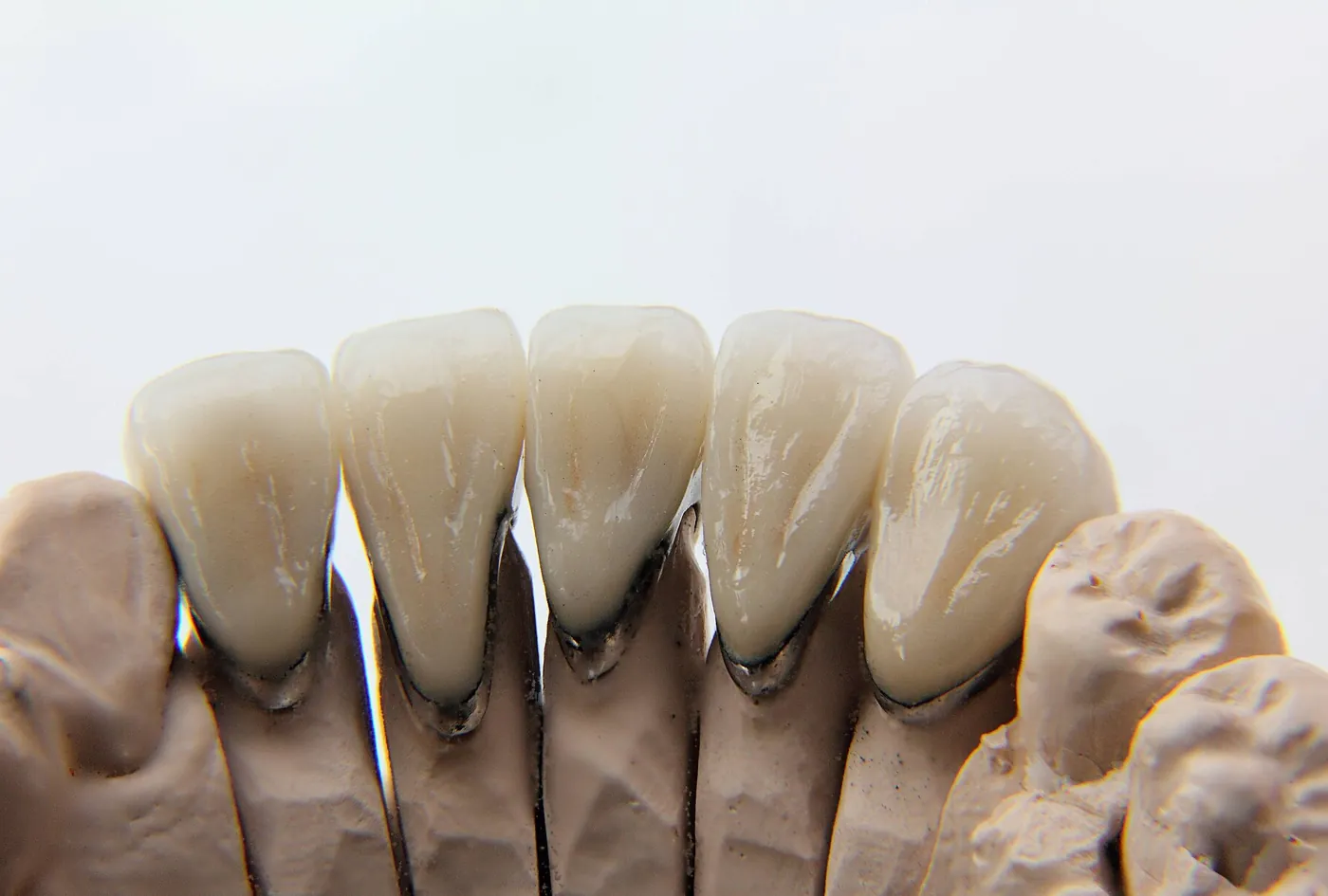 Porcelain crownsTooth-coloured all the way through, or porcelain over metal. €450 to €1,250 depending on which.
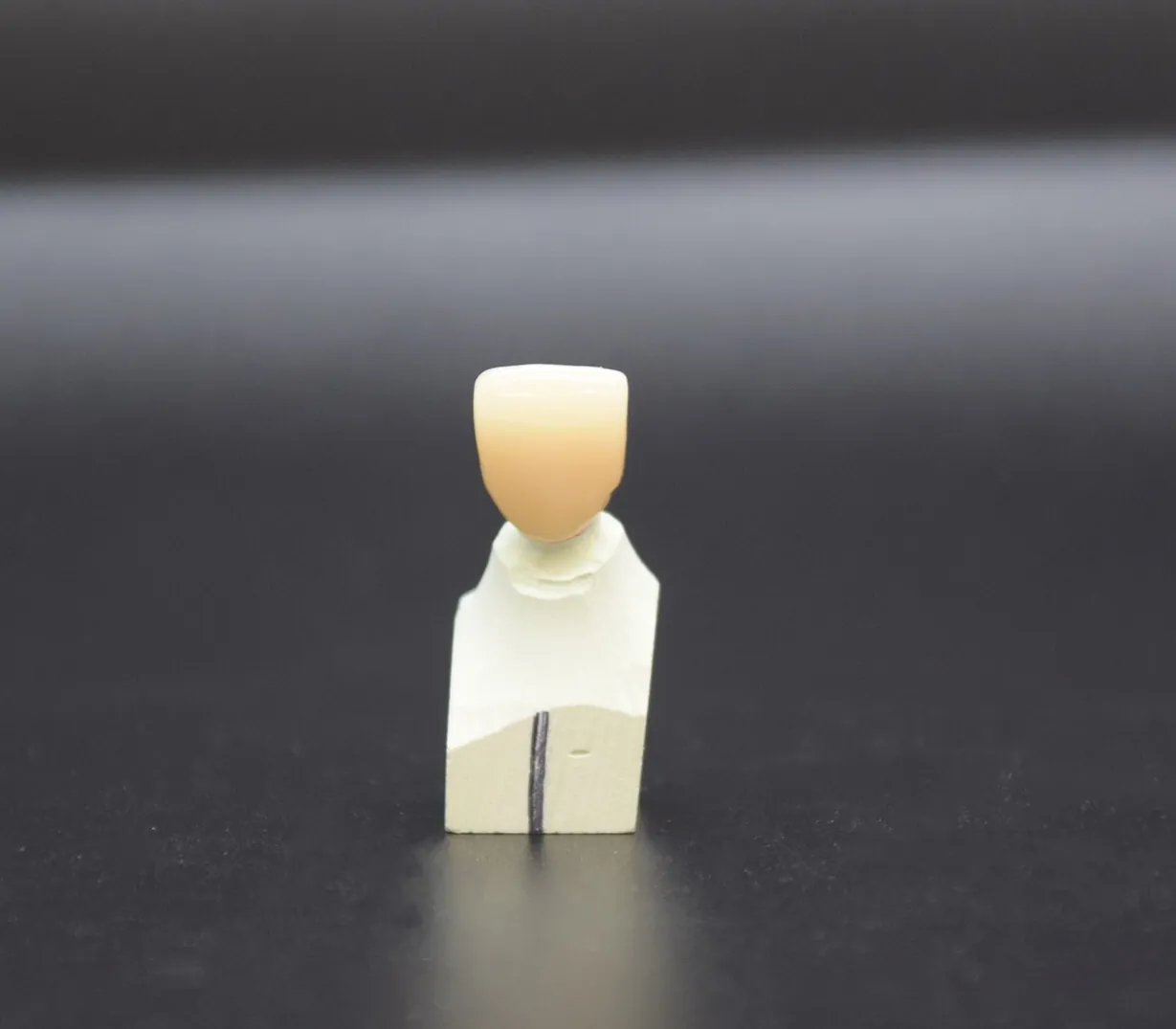 Zirconia crownsA very hard white ceramic, milled from one block. The usual pick for back teeth. €570 to €1,250.
 E.max crownsA glass ceramic that lets light through like enamel. The usual pick where the tooth shows. €450 to €900.
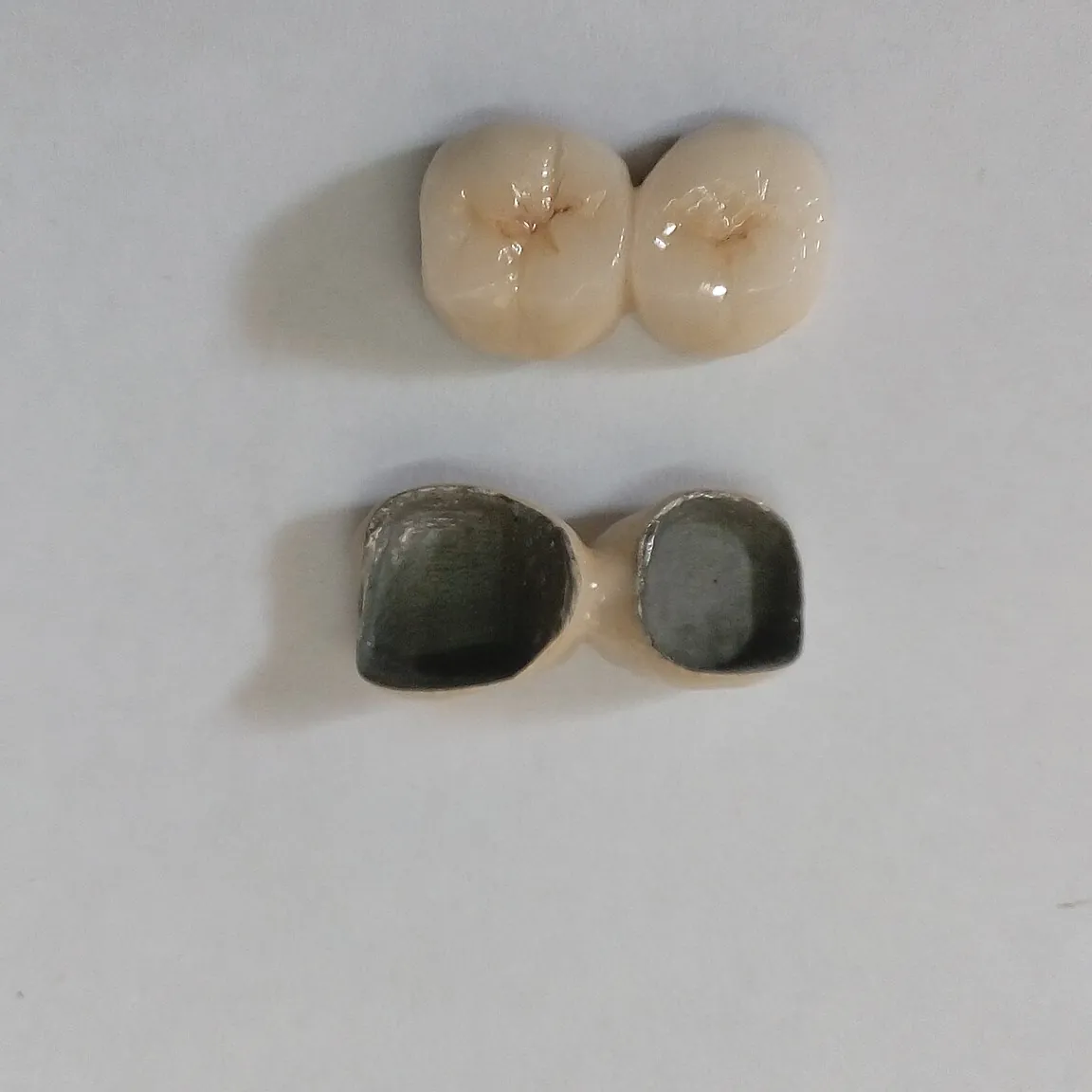 Porcelain fused to metalPorcelain over a metal shell. Decades of use, and the lower end of the range. €450 to €900.
 Same-day crownsScanned, milled in the practice and fitted in one visit, with no temporary crown.
 Crown on an implantMade to fit the implant, and screwed or cemented onto it. €950 to €1,235 for the crown.
Every question
How much does a dental crown cost in Ireland?
A dental crown in Ireland costs €500 to €1,500 a tooth at private practices, and most are between €800 to €1,100. Porcelain fused to metal is €450 to €900, zirconia €570 to €1,250, E.max €450 to €900 and gold €625 to €1,100. Every crown gets 20% tax relief, so a €900 crown costs €720 once you claim.
Which type of crown should I get?
All-ceramic crowns such as E.max are the usual choice where the tooth shows. Zirconia is the usual choice for back teeth, where the chewing is heaviest. Porcelain fused to metal costs least. Gold is still used on back teeth for people who grind. Your dentist picks with you after an examination.
How is a crown fitted?
Most crowns take two visits about two weeks apart. At the first, the tooth is numbed, shaped and scanned or moulded, and a temporary crown goes on. At the second, the finished crown is checked for fit, colour and bite, then cemented. A practice that mills crowns in-house can do it in one visit.
Does it hurt?
The tooth is numbed with a local anaesthetic before it's shaped, so the work itself shouldn't hurt. Tender gum and some sensitivity to hot and cold for a few days afterwards are common. Pain that builds, or a bite that feels high, is a reason to go back to the dentist.
How long does a crown last?
A crown often lasts 10 to 15 years, and many last longer. What ends a crown is usually decay at its edge, a crack in the porcelain or the cement letting go, so cleaning the gum line, and wearing a night guard if you grind, matter more than the material.
Can I claim tax relief on a crown?
Every crown gets tax relief at 20%: crowns are first on Revenue's list of non-routine dental treatment. Your dentist fills in a Form Med 2, you keep it, and you claim under the Non-Routine heading of your health expenses. You have four years to claim.
Is a crown covered by the medical card?
The medical card scheme covers an examination, two fillings, extractions and a scale and polish each year. Crowns are not part of it, so a crown is paid for privately, with 20% back as tax relief.
Does PRSI cover a crown?
PRSI Treatment Benefit pays for one oral examination a year and part of a scale and polish. It pays nothing towards a crown, but the free exam is a way to have the tooth looked at first.
What if my crown falls out?
Keep the crown, rinse it and bring it to a dentist within a few days. If the crown and the tooth are both sound it can usually be cemented back, €55 to €80. Don't use household glue. A pharmacy sells temporary crown cement to hold it in the meantime.
What is a temporary crown?
A plastic cap worn for about two weeks between the two visits. It protects the shaped tooth and holds the space. It's fixed with weak cement, so avoid sticky food.
Do I need a crown after a root canal?
On a back tooth, usually yes, because a root-treated tooth is more likely to split. On a front tooth with plenty of sound structure, a filling is sometimes enough.
What is a post and core?
A rod cemented into the root of a root-treated tooth, with a build-up on top, to hold a crown when little tooth is left. €120 to €400 in our price guide.
Crown or veneer?
A crown covers the whole tooth and repairs a weak one. A veneer covers the front of a sound tooth to change how it looks.
Crown or filling?
A filling if enough sound tooth is left to hold it. An onlay (€230 to €850) or a crown if a wall of the tooth is weak, cracked or missing.
What are the disadvantages of a crown?
The tooth is cut down for good, the nerve can be irritated, crowns cost more than fillings, and most need replacing after 10 to 15 years.
Can I get a crown in one visit?
Yes, at a practice that mills crowns in-house. The tooth is scanned, and the crown is made and fitted in two to three hours.
Can I have an MRI scan with a crown?
Yes. Crowns don't stop an MRI. Metal can blur the picture close to it, so tell the radiographer.
Are crowns abroad worth it?
The saving is large on many crowns and small on one once travel and a second visit are counted. Irish tax relief applies abroad if the dentist signs a Form Med 2.
How do I check a dentist is registered?
The Dental Council keeps the register of dentists in Ireland. Search it on the Dental Council's site.
What happens after I send the Crown check?
One Dental Council registered dentist who covers your county gets your answers and rings you to arrange an examination. Nothing is agreed until you've seen them and have a price in writing.
Is the Crown check a diagnosis?
No. It shows what dentists most often use for a tooth like yours and what it usually costs. Only a dentist who has examined and x-rayed the tooth can say what it needs.
Every crown guide and county
Types of crown
Guides
Check what your crown involves
Four taps to the likely crown, the cost and the tax relief. Then, if you want it, one Dental Council registered dentist who covers your county rings you.